
Community
 Community
Shipping&Logistics News
Community
Shipping&Logistics News
US-Iran tensions squeeze South Korea as oil, won spike erode gains
Date Created 2026.03.12 Views 7
High exchange rates and high oil prices hit Korea at the same time after U.S. airstrikes on Iran. The long-held formula that "a weaker won boosts exports" no longer works for the Korean economy.
That is because the import expense for intermediate goods, including crude oil, rises even more, offsetting any export gains from a weaker currency.
On top of that, logistics expense is mounting due to geopolitical risk. There are concerns that the Middle East war will worsen the profitability of Korea's major corporations.
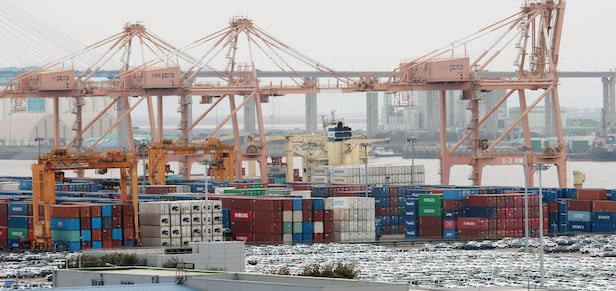
Export containers are stacked at Pyeongtaek Port in Poseung-eup, Pyeongtaek, Gyeonggi Province, on the 23rd last month. /Courtesy of News1
◇ "Fewer benefits from a weak won, triple burden from oil prices, raw materials, and logistics intensifies"
On the 4th, the won-dollar exchange rate briefly topped 1,500 won in early-morning transactions. It is the first time the rate has reached the 1,500-won range in 17 years, since March 2009 during the global financial crisis. Although the gain narrowed afterward, it is still trading at a high level (in the 1,470–1,480 won range) during weekly transactions.
In the past, a weak won benefited our export corporations. A higher exchange rate boosts price competitiveness, allowing more sales, or even with the same volume, the won-denominated revenue increases. That is no longer the case. Exports now center on items that compete on technology rather than price, and imports of intermediate goods needed for final-goods production have increased, so when the exchange rate rises, production expense climbs even more.
On top of this, high oil prices are piling on. Over two days on the 2nd and 3rd (local time), West Texas Intermediate (WTI) and Brent crude futures and Dubai crude spot prices all jumped more than 10%. As of the 3rd, Dubai and Brent were in the $80 range, and WTI was trading in the mid-$70s. An industry official said, "In a structure where crude is settled in dollars, if oil prices and the exchange rate rise at the same time, import unit costs jump twice over." The Korea International Trade Association estimates that a 10% rise in oil prices pushes up the average manufacturing cost by 0.68%.
The geopolitical situation of the Middle East war adds to logistics expense. Reduced vessel supply and soaring insurance premiums are driving up ocean freight rates, which directly increases the burden on export corporations. Home appliance makers such as Samsung Electronics and LG Electronics rely mainly on sea transport for bulky products like TVs, refrigerators, and washing machines.
A government official said, "The exchange rate is a problem, but the bigger problem is that oil prices are also spiking," adding, "The longer the war drags on, the more the 'triple burden' of oil, raw materials, and logistics costs will intensify for corporations."
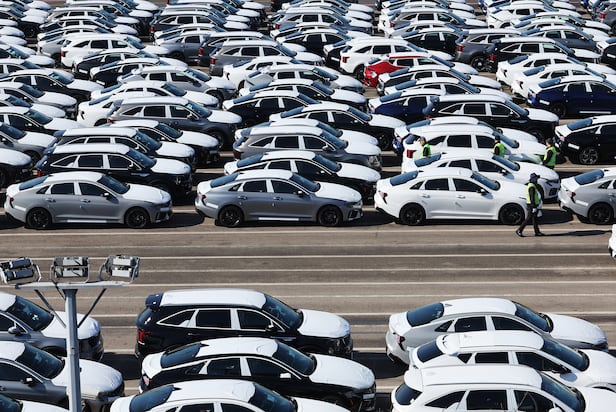
Export vehicles stand at Pyeongtaek Port in Gyeonggi Province on the 25th last month. /Courtesy of Yonhap News
◇ Negative impact on the top two export items, semiconductors and autos… shipbuilding could find opportunities
Semiconductors and automobiles, Korea's No. 1 and No. 2 export items, are no exception in this situation. On semiconductors, the Korea Chamber of Commerce and Industry said, "With the localization rate of materials, components, and equipment at only about 30%, cost pressures are higher, and major corporations are pouring massive dollars into building overseas plants, which offsets any benefits from a weaker currency." On autos, NICE Investors Service said, "Persistently high oil prices and worsening ocean logistics disruptions will push up costs."
Sectors highly dependent on raw material imports are likely to take a more direct hit. The refining industry, which imports all crude in dollars, is a prime example. SK Innovation has analyzed that a 10% rise in the exchange rate reduces pre-tax profit by about 154.4 billion won.
Airlines settle major fixed costs in dollars, including fuel, which accounts for about 30% of total operating expense, as well as aircraft lease fees and maintenance. At Korean Air Lines, every 10-won rise in the exchange rate is said to generate about 48 billion won in foreign-exchange valuation losses. For steelmakers, which rely on imports for key raw materials such as iron ore and thermal coal, cost pressures inevitably outpace any sales gains.
Still, some see opportunities for certain sectors such as shipbuilding. An industry official said, "If ships cannot depart from the Middle East due to ocean logistics disruptions, new vessel demand may emerge elsewhere," adding, "Higher ocean freight rates could also lead to new ship orders."